Why the Same Number?
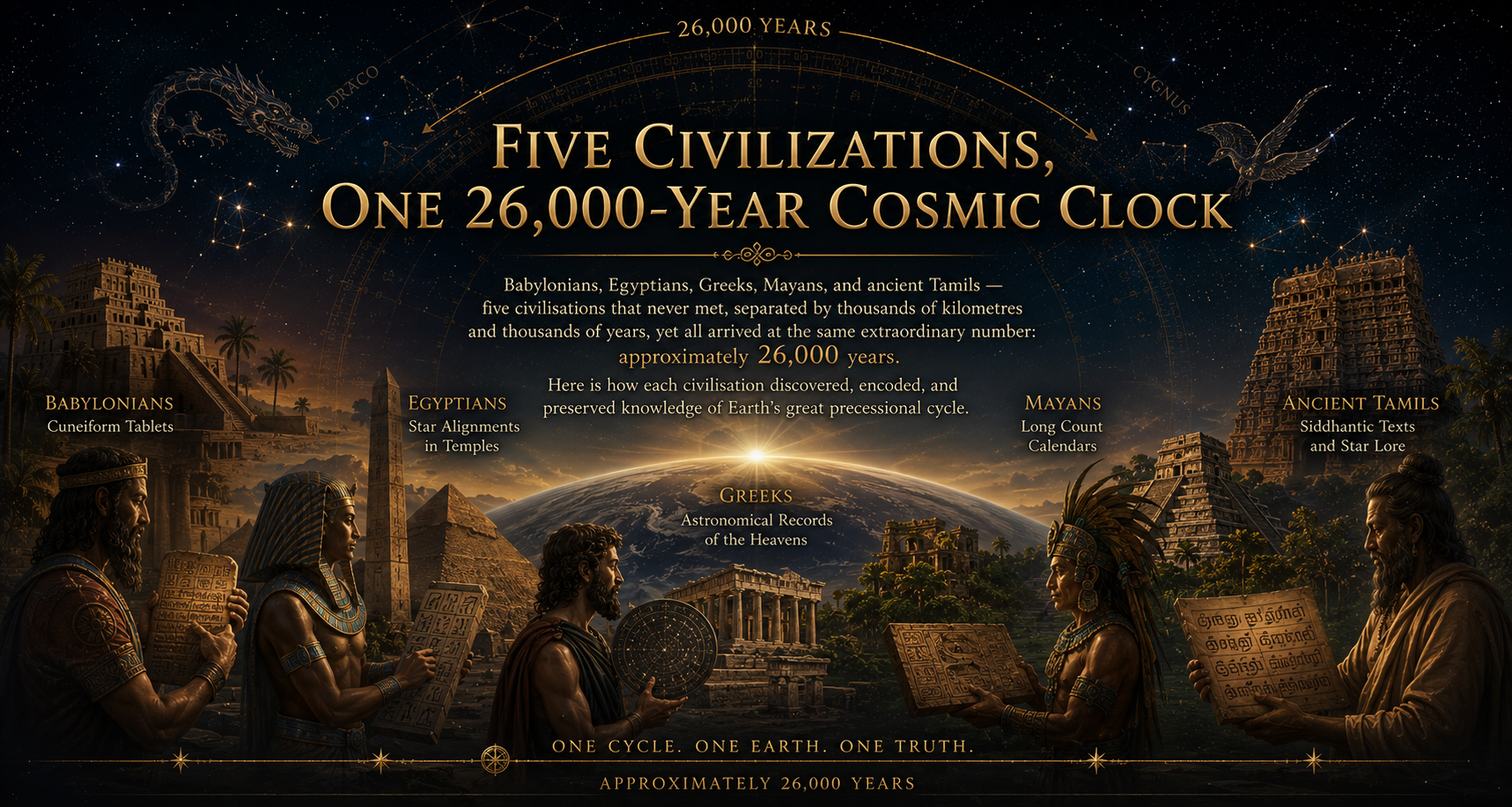
Earth's axial precession is a physical fact of our solar system — it does not care which civilisation is watching. Any culture that kept careful astronomical records across many generations would eventually notice the slow drift of the stars relative to fixed calendar dates. The discovery of the ~26,000-year cycle was, in a sense, inevitable for any civilisation that was patient enough and organised enough to maintain multi-century observational records.
What is remarkable is not that five civilisations discovered it — it is how each one preserved and applied this knowledge, and what it tells us about the sophistication of ancient human intelligence.
Civilisation 1 — The Babylonians
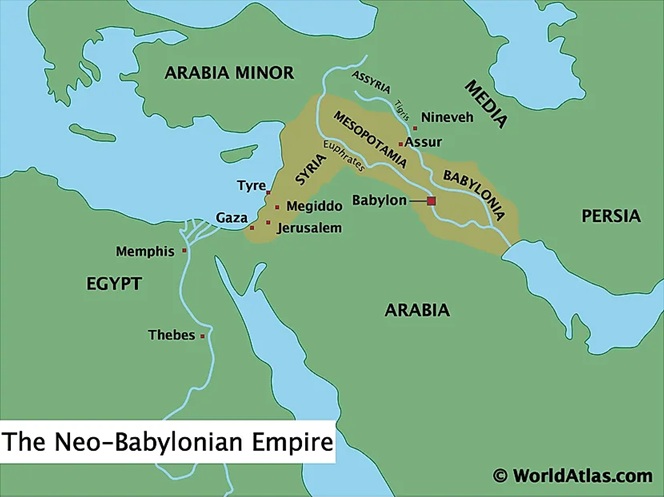
The Babylonians of Mesopotamia (modern Iraq) were among the earliest systematic astronomers. Beginning around 1800 BCE, temple scribes recorded lunar, planetary, and stellar positions on clay tablets across many centuries. This long baseline made slow celestial drift detectable.
The most important surviving Babylonian astronomical text is the MUL.APIN ("Star Plough") tablet series, dating to around 1200 BCE, which records the rising and setting of stars on specific calendar dates. By comparing these records across centuries, Babylonian astronomers could detect that the stars were slowly shifting relative to the calendar — the signature of precession.
Many historians argue that long-term Babylonian datasets informed later Greek work, especially in Hellenistic scientific exchange.
Civilisation 2 — The Egyptians
Egyptian astronomical interpretation is often discussed through architecture. The pyramids of Giza, built around 2560–2500 BCE, contain internal shafts aligned toward specific sky targets. Researchers debate how much these alignments imply explicit precessional modeling.
The most famous example: the "Queen's Chamber" southern shaft points toward Sirius (the star of Isis) as it appeared in 2560 BCE. The "King's Chamber" northern shaft points toward the star Thuban — which was the Pole Star in 2560 BCE, not Polaris. This demonstrates that Egyptian astronomers understood that the Pole Star was not a fixed point — it drifts over time.
The date 10,500 BCE appears in some alignment theories, but this remains a contested interpretation rather than archaeological consensus.
Civilisation 3 — The Greeks
The Greek astronomer Hipparchus of Nicaea is credited with the first mathematical calculation of precession in approximately 127 BCE. His method was precise and explicit: he compared his own star position measurements with those recorded by the Babylonian astronomer Timocharis 150 years earlier and detected a consistent shift.
Hipparchus calculated the precession rate at a minimum of 1° per 100 years (the true rate is ~1° per 72 years — his estimate was conservative). He coined the term precession of the equinoxes and estimated a full cycle of at least 36,000 years. His work was later refined by Ptolemy (150 CE) who gave a rate of 1° per 100 years — still too slow, but establishing precession as a mathematically defined astronomical quantity.
Civilisation 4 — The Mayans
The Maya of Central America developed one of the most sophisticated calendar systems in the ancient world. Their Long Count calendar counts days from a mythological creation date (August 11, 3114 BCE in the Gregorian calendar) and organises them into cycles of increasing magnitude.
The most discussed Mayan cycle in this context is the 5,125.36-year "World Age" — from the mythological creation date to December 21, 2012 (a calendar rollover, not an apocalypse prediction). Comparative writers note that five such cycles total 25,626 years; whether that reflects intentional precessional encoding is still debated.
Mayan astronomers also tracked the relationship between the Pleiades (called Tzab-ek, the rattlesnake's rattle) and the zenith passage of the Sun — a phenomenon directly affected by precession over long timescales.
Civilisation 5 — Ancient Tamils
Tamil astronomical tradition connects to the precessional cycle through multiple streams:
- The Tamil sidereal calendar: By deliberately using a star-fixed (sidereal) rather than season-fixed (tropical) year, Tamil astronomers were directly tracking the precession-driven drift between the two systems — observing its effects every generation.
- The Thirukkural theory: The proposed encoding of ~26,600 years in the 1,330 couplets of Thirukkural (1,330 × 20 = 26,600), within 3% of the true value. (See our full article on this theory.)
- The Aryabhatiya (499 CE): Tamil-influenced astronomer Aryabhata explicitly calculated the length of the sidereal year and understood the difference between sidereal and tropical years — the observational signature of precession.
- Nakshatra system: The 27-Nakshatra framework organises the sky in a way that makes precessional drift measurable — the Moon's position in Nakshatras relative to the equinox shifts detectably over centuries.

| Civilisation | Period | Key Evidence | Estimated Value |
|---|---|---|---|
| Babylonian | ~500 BCE | MUL.APIN tablets; 2,000 years of star records | Detected; rate estimated |
| Egyptian | ~2560 BCE | Pyramid shaft alignments to Thuban & Orion | Implied; no explicit number |
| Greek | ~127 BCE | Hipparchus: star position comparison, 150-year baseline | ≥36,000 years (conservative) |
| Mayan | ~250 CE+ | Long Count calendar: 5 × 5,125 year "World Ages" | ~25,626 years (0.6% error) |
| Tamil | ~500 BCE – 500 CE | Sidereal calendar; Thirukkural theory; Aryabhatiya | ~26,600 years (theory); calendar practice |
What This Tells Us
Comparing these civilisations highlights several useful historical lessons:
- Patient observation wins: None of these cultures used telescopes, satellites, or computers. They used patient, multigenerational observation and meticulous record-keeping. The sky rewards patience.
- Mathematics is universal: The precession rate of ~1° per 72 years is a physical constant. Any culture that measured it carefully enough arrived at the same number — a testament to the universality of mathematical reality.
- Ancient intelligence was rigorous: Long-duration records and inherited scholarly systems allowed precise astronomical reasoning without modern instruments.
- Tamil astronomy belongs in comparative history: Sidereal calendrics, Nakshatra frameworks, and Panchangam computation make Tamil material important in global history-of-astronomy studies.
Reading note: Some entries in this comparison are direct historical evidence (for example, Greek textual computation), while others are interpretive reconstructions (for example, certain architectural and literary-precessional mappings). Treat them with appropriate evidence weight.
ஐந்து நாகரிகங்கள் — ஒரே வான்
முன்சரிவு (precession) தொடர்பாக ஒப்பீட்டில் அதிகம் பேசப்படும் ஐந்து மரபுகள்: பாபிலோனியர், எகிப்தியர், கிரேக்கர், மாயன், தமிழர். இவைகளின் ஆதாரத் தரம் ஒன்றல்ல; சிலவை உறுதியான வரலாற்றுச் சான்றுகள், சிலவை விளக்க மாதிரிகள்.
பாபிலோனியர்
பாபிலோனியர் 19 ஆண்டு மேட்டான் சுழற்சியை கண்டுபிடித்தனர். அவர்கள் சூரிய மற்றும் சந்திர சுழற்சிகளை துல்லியமாக கணக்கிட்டனர். 60 வினாடி → 60 நிமிடம் → 24 மணிநேரம் என்ற நேர அளவுகோல் அவர்களது கணிதத்தின் வழிவந்தது.
எகிப்தியர்
எகிப்தியர் சிரியஸ் நட்சத்திரத்தின் வருடாந்திர உதயத்தை (Heliacal Rising) கொண்டு நைல் வெள்ளத்தை முன்கூட்டி அறிந்தனர். கிசா பிரமிட்கள் வான் திசைகளை நோக்கி கட்டப்பட்டன.
மாயன்
மாயன் நாட்காட்டி நீண்ட சுழற்சிகளை பதிவு செய்கிறது. அதை 26,000 ஆண்டு முன்சரிவுடன் நேரடியாக இணைக்கும் விளக்கங்கள் உள்ளன; ஆனால் இது ஆய்வாளர்கள் இடையே விவாதப் பொருளாகவே உள்ளது.
தமிழர்
தமிழ் மரபில் முன்சரிவுடன் தொடர்புபடுத்தப்படும் பல விளக்கங்கள் உள்ளன — திருக்குறள் எண் அமைப்பு, நாட்காட்டி முறை, நட்சத்திர கணிதம் போன்றவை. இவற்றை ஆய்வு செய்வதில் மரபு மற்றும் வரலாற்று-ஆதார எல்லையை தெளிவாகப் பிரித்து அணுகுவது அவசியம்.
ஒரே கேள்வி — ஐந்து விடைகள்: இந்த ஐந்து நாகரிகங்களும் ஒன்றையொன்று அறியாமல் ஒரே வானியல் சுழற்சியை கண்டுபிடித்திருந்தன. வானம் ஒன்றே — மனிதன் எங்கிருந்தாலும் ஒரே உண்மையை கண்டுபிடிக்கிறான்.