What is the Tamil Calendar?
The Tamil calendar — known as the Panchangam — is one of the world's oldest continuously active calendar systems, used across Tamil Nadu, Sri Lanka, Malaysia, Singapore, and diaspora communities worldwide. Unlike the purely solar Gregorian calendar or the purely lunar Islamic calendar, the Tamil system is lunisolar: it tracks the Sun for months and years, and the Moon for auspicious timings and festival days.
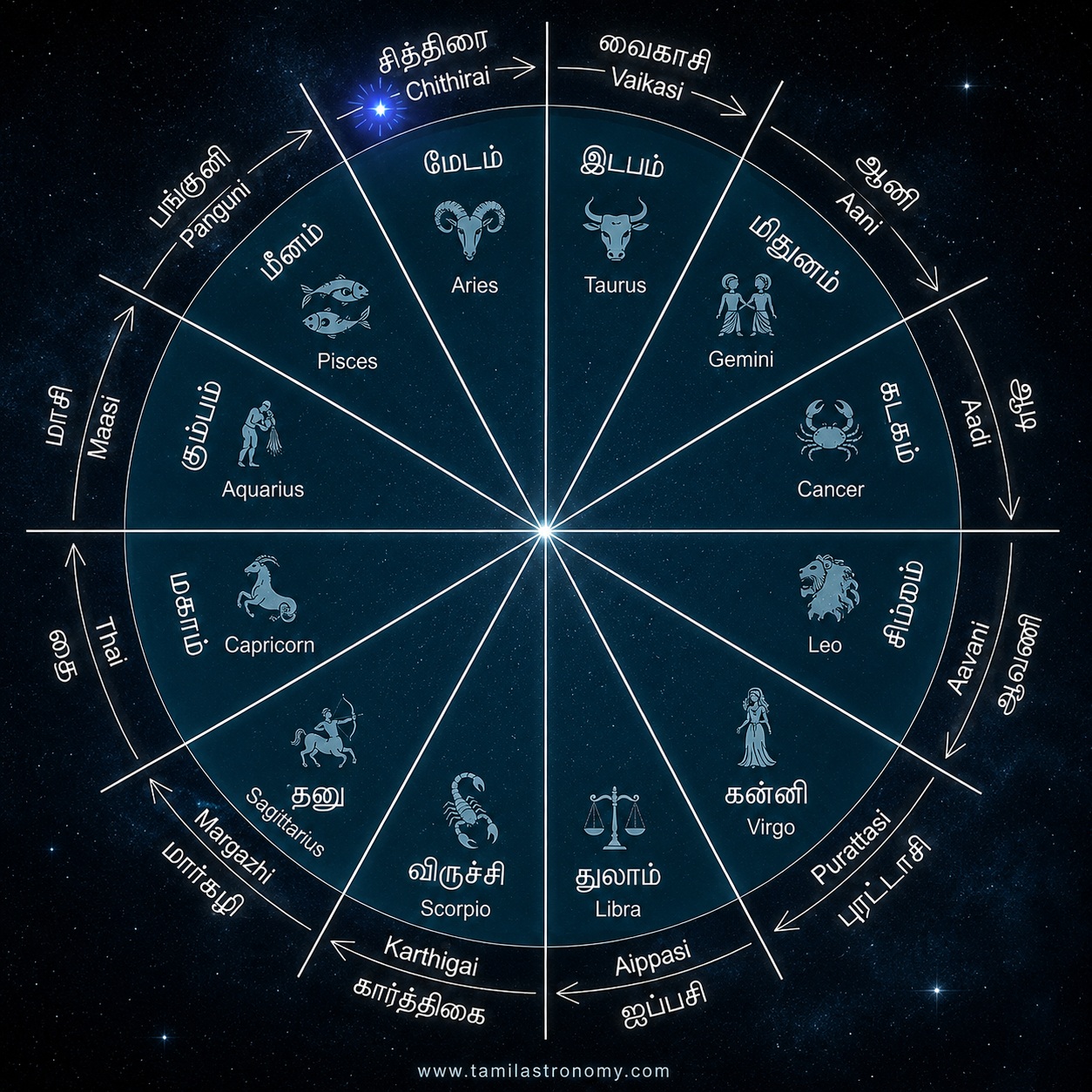
The calendar has 12 months, each corresponding to the Sun's position in a zodiac constellation (Rasi). It also runs on a 60-year cycle of named years — Vijaya, Jaya, and so on — a cycle shared with the Chinese calendar, both derived from the orbital period of Jupiter (Guru / Brihaspati), which takes about 12 years to orbit the Sun. Five Jupiter cycles = 60 years.
The 12 Tamil Months and Their Zodiac Pairs
| Tamil Month | Tamil Name | Western Zodiac | Approx. Dates |
|---|---|---|---|
| 1 | Chithirai · சித்திரை | Aries / Mesham | Apr 14 – May 14 |
| 2 | Vaikasi · வைகாசி | Taurus / Rishabam | May 15 – Jun 14 |
| 3 | Aani · ஆனி | Gemini / Midhunam | Jun 15 – Jul 16 |
| 4 | Aadi · ஆடி | Cancer / Kadagam | Jul 17 – Aug 16 |
| 5 | Aavani · ஆவணி | Leo / Simham | Aug 17 – Sep 16 |
| 6 | Purattasi · புரட்டாசி | Virgo / Kanni | Sep 17 – Oct 17 |
| 7 | Aippasi · ஐப்பசி | Libra / Thulam | Oct 18 – Nov 16 |
| 8 | Karthigai · கார்த்திகை | Scorpio / Viruchigam | Nov 17 – Dec 15 |
| 9 | Margazhi · மார்கழி | Sagittarius / Dhanusu | Dec 16 – Jan 13 |
| 10 | Thai · தை | Capricorn / Makaram | Jan 14 – Feb 12 |
| 11 | Maasi · மாசி | Aquarius / Kumbam | Feb 13 – Mar 13 |
| 12 | Panguni · பங்குனி | Pisces / Meenam | Mar 14 – Apr 13 |
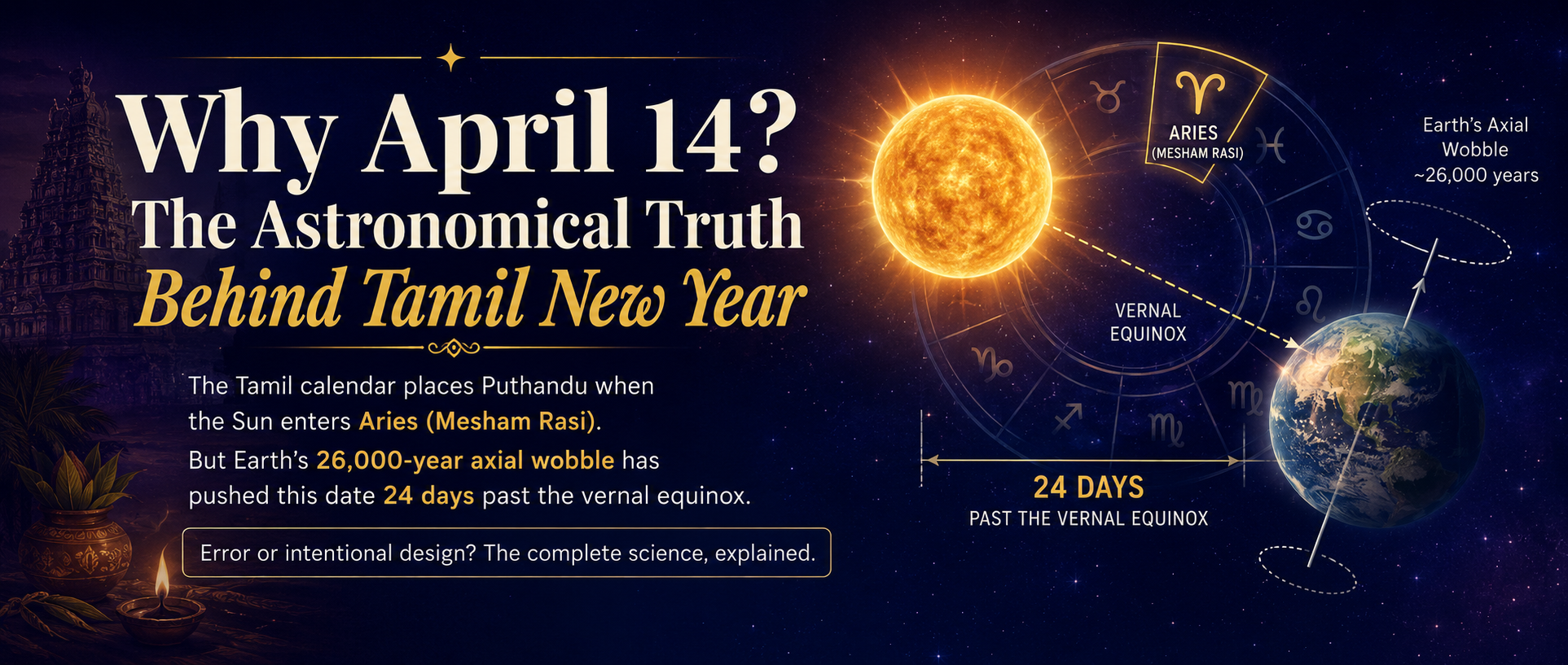
Tamil New Year — Puthandu (புத்தாண்டு) — begins when the Sun crosses into Mesham (Aries). This moment is called Mesha Sankranti. In 2026, this falls on April 14. But why not March 21 — the vernal equinox, the astronomical start of spring in the Northern Hemisphere? The answer lies in a fundamental distinction between two ways of measuring the year.
Sidereal vs Tropical — Two Ways to Count a Year
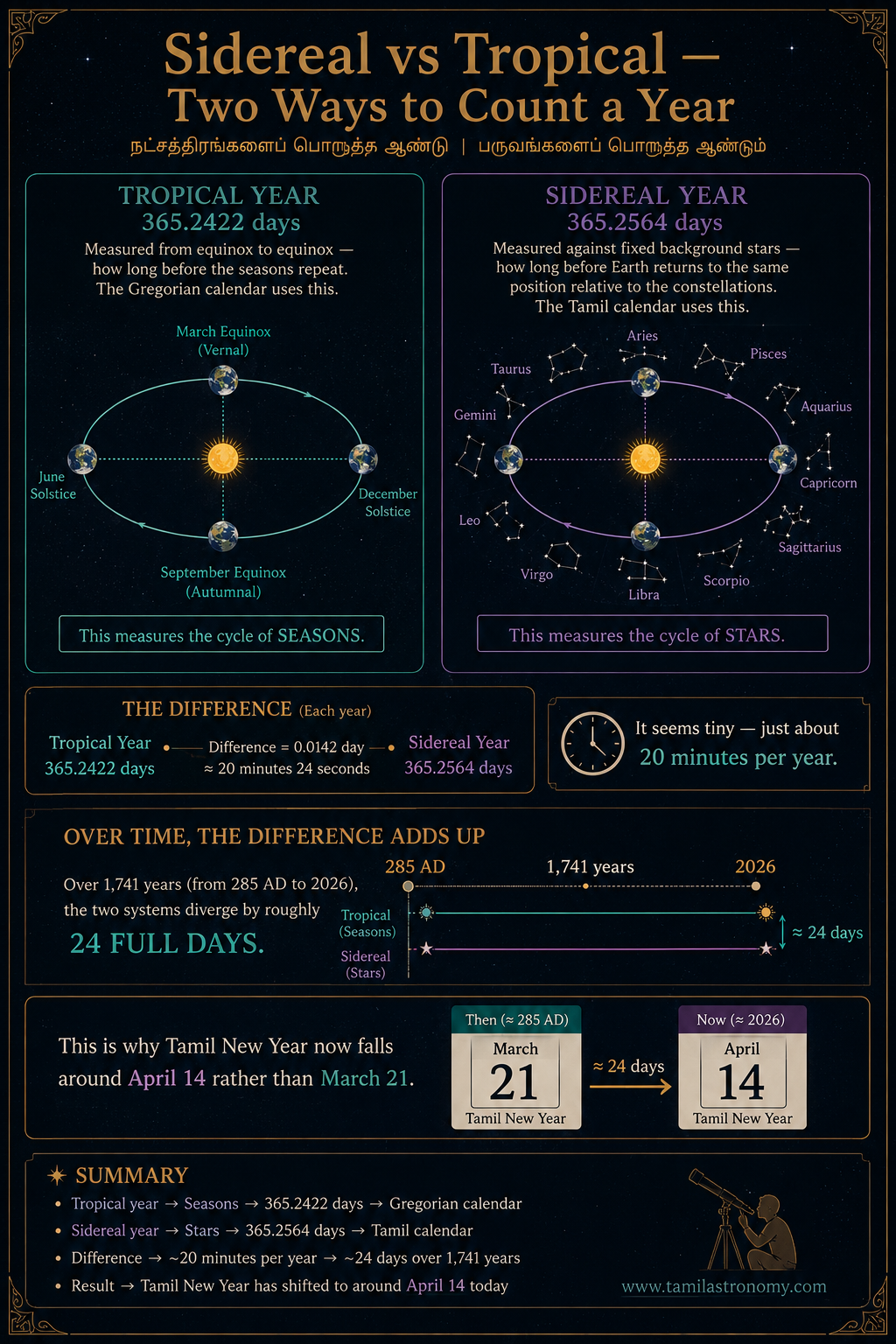
Here is the core of the entire Tamil calendar debate, expressed simply:
A Tropical year (365.2422 days) is measured from equinox to equinox —
how long before the seasons repeat. The Gregorian calendar uses this.
A Sidereal year (365.2564 days) is measured against fixed background stars —
how long before Earth returns to the same position relative to the constellations.
The Tamil calendar uses this.
The difference seems tiny — just about 20 minutes per year. But over centuries, those 20 minutes accumulate. Over 1,741 years (from 285 AD to 2026), the two systems diverge by roughly 24 full days. This is why Tamil New Year now falls around April 14 rather than March 21.
What is Ayanamsha?
Ayanamsha (ஆயனாம்சம்) is the Sanskrit term for the angular gap between the tropical and sidereal zodiacs. It grows at roughly 50 arc-seconds per year. The most widely used measurement is the Lahiri Ayanamsha, officially adopted by the Government of India's national calendar.
| Year | Ayanamsha | Tamil New Year (approx.) | Vernal Equinox |
|---|---|---|---|
| 285 AD | 0° 0′ | March 21 | March 21 |
| 499 AD | 2° 59′ | March 24 | March 21 |
| 1000 AD | 10° 30′ | April 2 | March 21 |
| 1600 AD | 17° 46′ | April 10 | March 21 |
| 2026 AD | 24° 7′ | April 13–14 | March 21 |
Around 285 AD, the two systems are often treated as aligned in later computational models. Tamil New Year coincided with the spring equinox in that reference frame — a commonly used epoch point in calendar discussions — also the approximate era of great Tamil astronomical scholars such as Aryabhata, who wrote the Aryabhatiya in 499 AD.
Precession of the Equinoxes
The root cause of this entire debate is a phenomenon called precession of the equinoxes — Earth's slow axial wobble. Like a spinning top that is gradually slowing down, Earth's axis does not point in a fixed direction. It slowly traces a cone in space, completing one full wobble every ~25,772 years.
The most visible effect of this wobble: our Pole Star changes over time. Today, Earth's axis points to Polaris. In about 14,000 years, it will point to Vega — a star six times brighter. This slow drift was noticed by ancient astronomers across many civilisations by carefully comparing star positions across centuries.
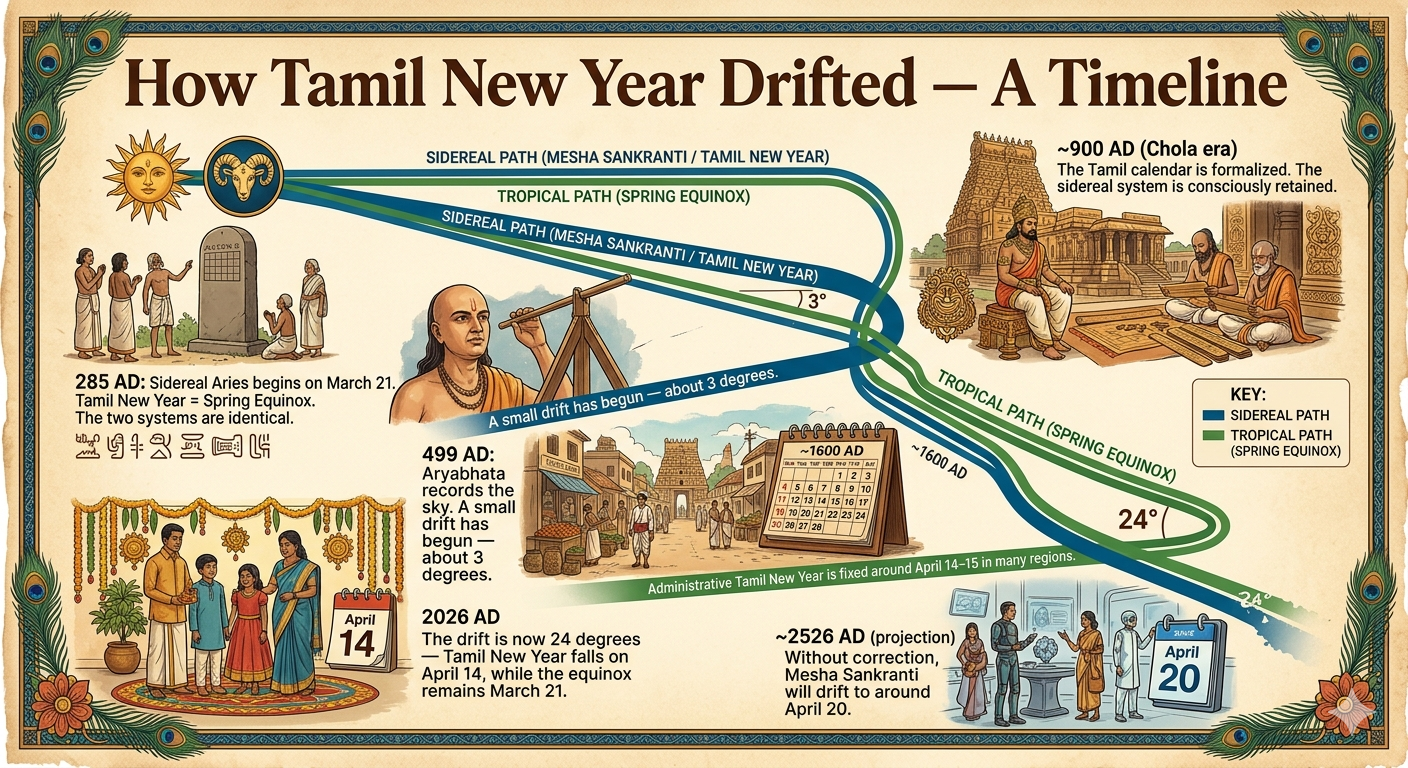
How Tamil New Year Drifted — A Timeline
- 285 AD: Sidereal Aries begins on March 21. Tamil New Year = Spring Equinox. The two systems are identical.
- 499 AD: Aryabhata records the sky. A small drift has begun — about 3 degrees.
- ~900 AD (Chola era): The Tamil calendar is formalized. The sidereal system is consciously retained.
- ~1600 AD: Administrative Tamil New Year is fixed around April 14–15 in many regions.
- 2026 AD: The drift is now 24 degrees — Tamil New Year falls on April 14, while the equinox remains March 21.
- ~2526 AD (projection): Without correction, Mesha Sankranti will drift to around April 20.
The Vakya vs Drik Debate
Separate from the tropical vs sidereal question, there is a practical debate about which calculation method to use for determining the Tamil New Year date precisely.
| Aspect | Vakya Panchangam | Drik Panchangam |
|---|---|---|
| Basis | Ancient poetic verses (~600 AD) | Modern astronomical algorithms |
| Accuracy | ~1–2 day error (accumulated drift) | Precise to minutes |
| Common usage | Most households, temples, festivals | Astrologers, official almanac bodies |
| New Year date | Can fall on April 14 or April 15 | Precisely April 13 or 14 |
| Error source | 400+ years of formula drift | None — recalculated each year |
The Vakya Panchangam uses ancient memorized verses — a beautiful achievement of Tamil scholarship that encoded astronomical calculations into poetic meter for easy oral transmission. However, those verses were written around 600 AD, and their formulas have accumulated a small error over the past 1,400 years.
The Drik Panchangam uses precise modern ephemeris calculations, recalculated every year. It never produces the April 15 date — always April 13 or 14.
Bottom line on Vakya vs Drik: The Drik method is astronomically precise. The Vakya method carries a small accumulated error. Most scholars recommend using Drik for official dates while honouring the Vakya tradition for its cultural and historical significance.
The Deeper Debate: April 14 vs March 21
What is March 21?
It is the Vernal Equinox — the one moment in the year when Earth's axis is tilted neither toward nor away from the Sun. The result: every place on Earth gets exactly 12 hours of daylight and 12 hours of darkness. "Equinox" literally comes from Latin aequus (equal) + nox (night).
Why does it happen?
Earth's axis is tilted at 23.5°. As Earth orbits the Sun through the year, this tilt points sometimes toward the Sun (summer), sometimes away (winter), and twice crosses a neutral position where neither pole leans in — those two neutral crossings are the equinoxes.
Where did the date come from — who decided March 21?
Nobody "invented" March 21 — it is a physical event that happens every year regardless of any calendar. But the key moment in history that locked it to our calendar system was the Council of Nicaea in 325 AD. The Roman Catholic Church needed a fixed date to calculate Easter, and they agreed that the vernal equinox would always be treated as March 21. They then built the Julian calendar — and later the Gregorian calendar (1582 AD) — specifically to keep the equinox anchored near that date.
The Gregorian calendar's leap year rules (adding Feb 29 every 4 years, skipping every 100 years, restoring every 400 years) exist for exactly one reason: to stop the equinox from drifting away from March 21.
Some scholars and reformers argue that Tamil New Year should be March 21 — the actual vernal equinox, the true astronomical start of spring, the point where the ancient Tamil calendar originally began in 285 AD. From this view, the drift to April 14 is an error that ought to be corrected.
Traditionalists counter that this misunderstands the Tamil calendar's philosophy. The Nirayana (sidereal) system — measuring against fixed stars — was a deliberate, conscious choice. Ancient Tamil scholars, including Aryabhata himself, understood precession. They chose stars, not seasons. April 14 is not a mistake; it is the correct answer to a different question: when does the Sun enter the star-fixed constellation of Aries?
The Five Key Takeaways
- In many calendar models, 285 AD is treated as a practical sidereal–tropical alignment epoch.
- Due to Earth's precession (~50 arc-seconds per year), Tamil New Year appears ~24 days later than the equinox in the current era.
- The Vakya Panchangam has accumulated a ~1–2 day error. This is why it sometimes gives April 15 instead of April 14.
- The modern Drik Panchangam calculates Mesha Sankranti precisely each year — always April 13 or 14. This resolves the Vakya error.
- The question of April 14 vs March 21 is a philosophical choice — stars vs seasons — not a scientific miscalculation. Both are internally consistent systems.
Interpretive summary: April 14 aligns with contemporary sidereal practice in many Panchangam traditions, while equinox-based systems stay near March 21. The debate is primarily about reference frame (stars vs seasons), not about whether one calendar is inherently invalid.
தமிழ் புத்தாண்டு என்றால் என்ன?
தமிழ் நாட்காட்டி சூரியனை மையமாக கொண்டது — சித்திரை மாதம் சூரியன் மேஷ ராசியில் நுழையும்போது புத்தாண்டு தொடங்குகிறது. இந்த தருணம் ஒவ்வொரு ஆண்டும் ஏப்ரல் 14 அன்று வருகிறது.
ஏப்ரல் 14 ஏன் — மார்ச் 21 இல்லை?
இயற்கையான வசந்த சம இரவு (Equinox) மார்ச் 21 அன்று வருகிறது. அன்றுதான் பகலும் இரவும் சம அளவில் இருக்கும். ஆனால் தமிழ் புத்தாண்டு ஏப்ரல் 14 அன்று வருகிறது — 24 நாட்கள் தாமதமாக. ஏன்?
காரணம் பூமியின் அச்சு சாய்வு (Precession). பூமியின் சுழற்சி அச்சு ஒரு சிறிய தட்டான பம்பரம் போல மெல்ல சாய்கிறது — ஒரு முழு சுழற்சிக்கு 25,772 ஆண்டுகள் ஆகும். இந்த சாய்வின் காரணமாக கடந்த 1,700 ஆண்டுகளில் சூரியன் மேஷத்தில் நுழையும் நாள் 24 நாட்கள் நகர்ந்துவிட்டது.
சித்திரை நட்சத்திரம்
ஏப்ரல் 14 அன்று சூரியன் சித்திரை நட்சத்திரத்தின் வழியாக செல்கிறது. சித்திரை என்பது ஸ்பைக்கா (Spica) என்ற நட்சத்திரம் — கன்னி ராசியின் பிரகாசமான நட்சத்திரம். இந்த சித்திரை நட்சத்திரம் தான் தமிழ் மாத பெயருக்கு அடிப்படையாக இருக்கிறது.
நட்சத்திர ராசி vs வெப்பமண்டல ராசி
இரண்டு வகையான ராசிக்கட்டங்கள் உள்ளன. நட்சத்திர ராசி (Sidereal) நட்சத்திரங்களை அடிப்படையாக கொண்டது — தமிழ் பஞ்சாங்கம் இதனைப் பயன்படுத்துகிறது. வெப்பமண்டல ராசி (Tropical) பருவகாலங்களை அடிப்படையாக கொண்டது — மேற்கத்திய ஜோதிடம் இதனை பயன்படுத்துகிறது. இந்த இரண்டும் இப்போது 24 நாட்கள் வித்தியாசத்தில் உள்ளன.
சுருக்கம்: தமிழ் புத்தாண்டு ஏப்ரல் 14 அன்று வருவது தவறு அல்ல — இது பூமியின் நட்சத்திர நிலையை அடிப்படையாக கொண்ட ஒரு துல்லியமான கணக்கீடு.