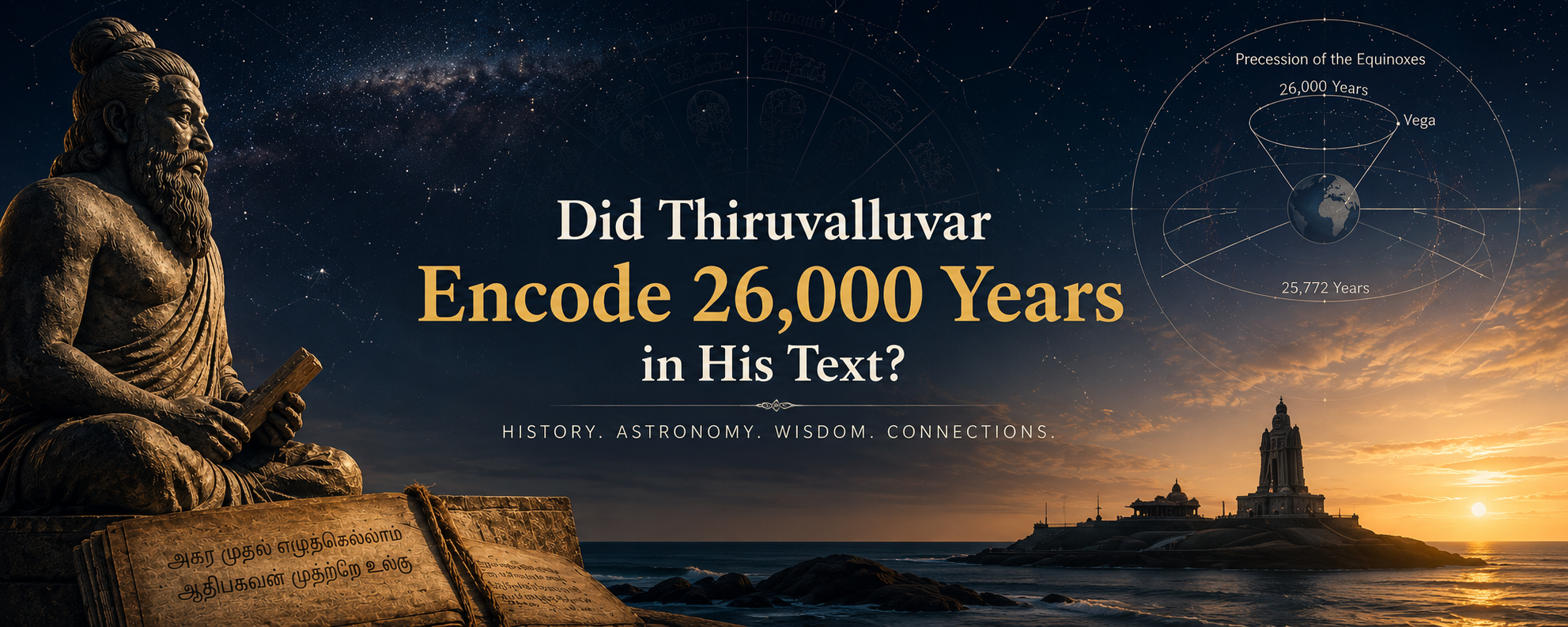
What is the Thirukkural?
The Thirukkural (திருக்குறள்) is one of the greatest and most celebrated works in all of Tamil literature. Composed by the poet-philosopher Thiruvalluvar approximately 2,000 years ago, it contains 1,330 couplets — called kurals — written in a terse, elegant verse form that packs extraordinary meaning into just seven words per couplet.

The text is divided into three books, each addressing a fundamental pillar of human life:
| Book | Tamil | Theme | Couplets | × 20 | Years |
|---|---|---|---|---|---|
| Aram | அறம் | Virtue & Ethics | 380 | × 20 | 7,600 |
| Porul | பொருள் | Governance & Wealth | 700 | × 20 | 14,000 |
| Inbam | இன்பம் | Love & Joy | 250 | × 20 | 5,000 |
| Total | 1,330 | 26,600 years | |||
The claim explored here is interpretive: if you multiply each section's couplet count by 20 — treated in some modern readings as a symbolic time multiplier — you get approximately 26,600 years. Earth's modern mean precessional cycle is commonly cited as ~25,772 years. The numerical difference is under 3%.
Note: The Thirukkural-precession connection is a fascinating alternative history theory, not yet accepted as mainstream academic consensus. It is presented here as a thought-provoking idea that invites open-minded investigation and further scholarly research.
Earth's Axis Wobble — Precession Explained
To understand the cosmic significance of 26,000 years, we need to understand that Earth moves in three distinct ways simultaneously:
- Daily spin (rotation) — Earth completes one full rotation in 24 hours, creating day and night.
- Annual orbit around the Sun — Earth completes one orbit in 365.25 days, producing our seasons.
- Axial wobble (precession) — Earth's axis slowly traces a cone shape in space, completing one full wobble every ~25,772 years.
Think of a spinning top that is very gradually slowing down. It does not simply spin in place — its axis itself slowly circles around, like a wobbling gyroscope. Earth behaves exactly this way, driven by the gravitational pull of the Sun and Moon on our planet's slight equatorial bulge.
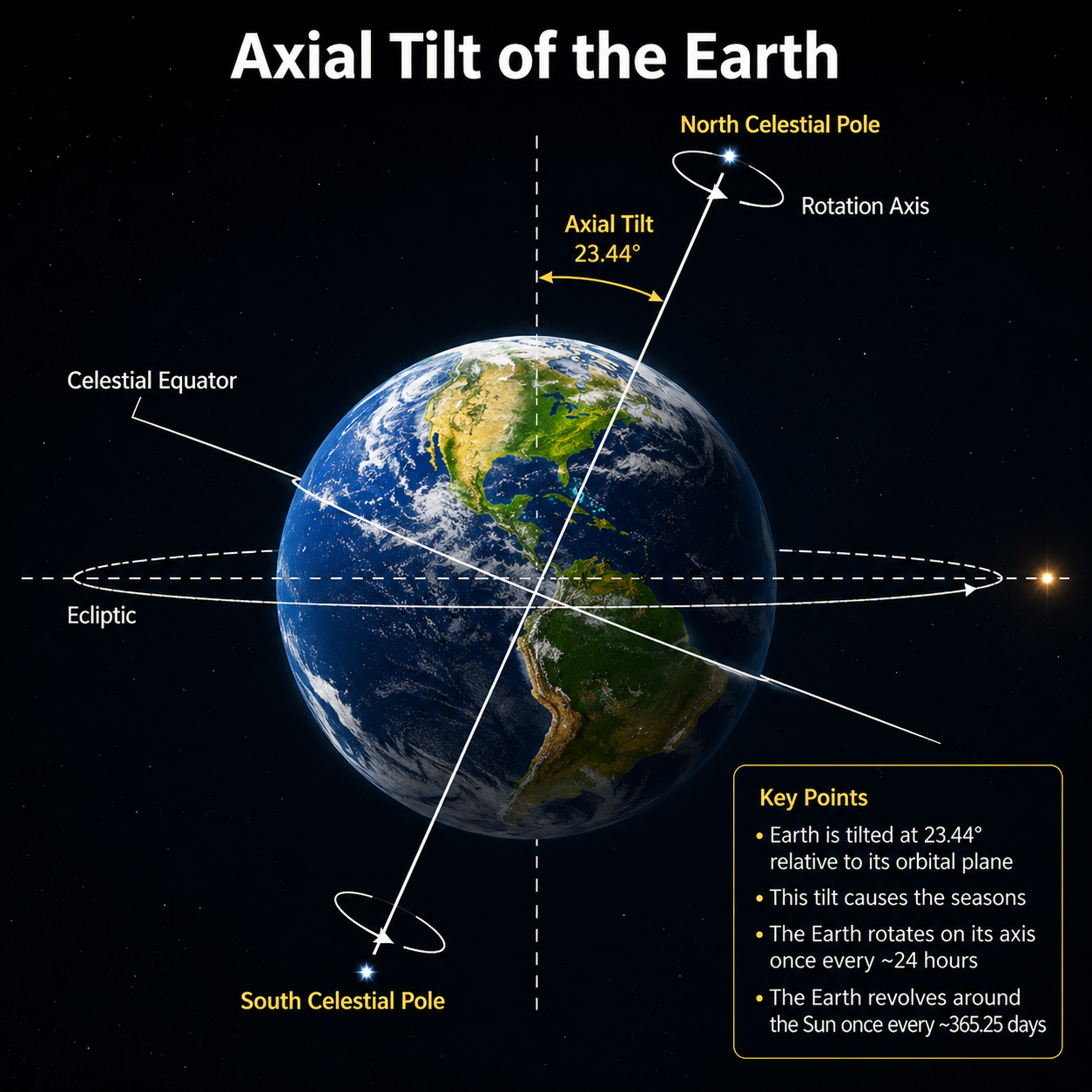
The most dramatic visible consequence of precession: our Pole Star changes over time. Today, Earth's axis points to Polaris. In approximately 14,000 years, it will point to Vega — a star six times brighter than Polaris. After another 12,000 years, it will return to Polaris. A complete circle takes one full precessional cycle.
The Precessional Numbers
How Did Ancient Astronomers Discover 26,000 Years?
No single person lived long enough to directly observe the full precessional cycle. Its discovery required something more powerful: multi-generational observation combined with mathematics. Here is the method ancient astronomers used:
| Step | Method |
|---|---|
| 1. Mark a reference star | On a fixed calendar date (e.g. the summer solstice), priests recorded exactly which star rose on the eastern horizon at sunrise. |
| 2. Wait centuries and re-check | Hundreds of years later, scholars compared new observations against the ancient records. A slightly different star now rose at the same time. |
| 3. Measure the drift rate | Stars drift at a steady rate of approximately 1 degree every 72 years — slow enough that only long records could reveal it. |
| 4. Scale up to a full circle | 360 degrees × 72 years per degree = 25,920 years for one complete cycle. Ancient scholars called this the "Great Year" or "Platonic Year." |
Tools Ancient Astronomers Used
- Temple doorways — aligned to solstice sunrise; precession drift became visible over centuries as the sunrise point shifted.
- Written star catalogues — the Babylonians kept continuous astronomical records for 2,000+ years, enabling rate calculations.
- Gnomon shadows — vertical poles cast measurable shadows on solstice days, precisely recording the Sun's position.
- Poetic preservation — some researchers argue astronomical ideas were preserved through memorable verse traditions.
The Orion Connection — Pyramids and Tamil Deities
One striking aspect of the Thirukkural-cosmos theory involves the three stars of Orion's Belt. The Orion Correlation Theory — proposed by researcher Robert Bauval in 1994 — suggests the three Great Pyramids of Giza were deliberately laid out to mirror Orion's Belt as it appeared around 10,500 BCE, near the beginning of the last precessional half-cycle.
Interestingly, the three stars of Orion's Belt can be mapped to major Tamil deities:
| Orion Star | Giza Pyramid | Tamil Deity |
|---|---|---|
| Alnitak | Great Pyramid (Khufu) | Kiruzhnan (Krishna) |
| Alnilam | Pyramid of Khafre | Sivan (Shiva) |
| Mintaka | Pyramid of Menkaure | Murugan |
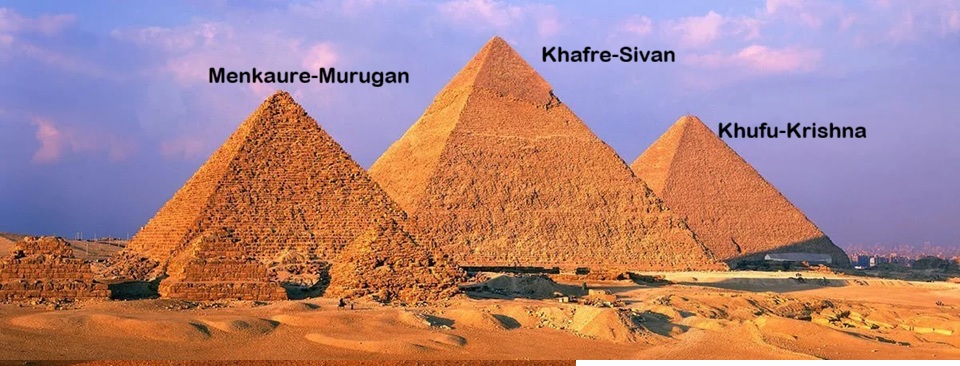
Whether ancient Tamils shared the same cosmic knowledge as the Egyptians remains an open and fascinating question for researchers. What is clear is that many ancient civilisations — separated by ocean and time — converged on the same astronomical cycle.
Tamil Tinai Poetry and Cosmic Time
Ancient Tamil poetry organised the world into five classical landscape zones called Tinai (திணை). Each Tinai carried its own mood, deity, flora, fauna — and, according to this theory, its own cosmic time period:
| Tinai (Landscape) | Tamil | Deity | Mood | Cosmic Period |
|---|---|---|---|---|
| Kurinji (Hills) | குறிஞ்சி | Murugan | Love / Union | ~1,200 years |
| Mullai (Forest) | முல்லை | Thirumal | Patience | ~5,000 years |
| Marutham (Fields) | மருதம் | Indra | Infidelity | Transitional |
| Neythal (Sea) | நெய்தல் | Varunan | Longing | Transitional |
| Paalai (Desert) | பாலை | Krishnan | Separation | ~5,400 years |
A Global Pattern — Five Civilisations, One Cycle
Whether or not the Thirukkural connection is intentional, it invites us to look at ancient texts and monuments in a new light. Several cultures around the world appear to have independently encoded — or at least understood — the same ~26,000-year precessional cycle:
| Civilisation | Evidence of Precessional Knowledge |
|---|---|
| Babylonians | Star catalogues spanning 2,000+ years; MUL.APIN tablets (~1200 BCE) show precise stellar positions used to track long-period cycles. |
| Egyptians | Pyramid shaft alignments to Orion and Thuban (the former pole star ~3000 BCE) suggest knowledge of polar drift over thousands of years. |
| Greeks | Hipparchus officially calculated precession in ~127 BCE by comparing his star positions against Babylonian records 150 years older. |
| Mayans | Some comparative models map Long Count cycles to near-precessional durations; this remains debated among specialists. |
| Ancient Tamils | Thirukkural verse-count theory (1,330 × 20 ≈ 26,600 years) + Tinai cosmic time mapping + sidereal calendar precision. |
Why Does This Matter?
The night sky was humanity's first textbook. Long before telescopes, satellites, or computers, ancient cultures observed seasonal and stellar patterns over generations and preserved them in calendars, inscriptions, and literature. Modern astronomy confirms precession as a real long-term cycle; how explicitly each tradition quantified it can vary.
The idea that the Thirukkural may preserve a numerical echo of precession is best handled as a research hypothesis, not a settled historical fact. Whether the 26,600 vs 25,772 comparison reflects intention, symbolic composition, or coincidence, it encourages deeper study of Tamil intellectual history and historical astronomy.
The bottom line: This article presents an interpretive numerical comparison. It is intriguing and worth further study, but it should be read alongside textual criticism, inscriptional evidence, and mainstream history-of-science methods.
திருக்குறள் — ஒரு அறிமுகம்
திருக்குறள் என்பது திருவள்ளுவர் இயற்றிய தமிழ் இலக்கியத்தின் மாபெரும் படைப்பு. 1,330 குறட்பாக்கள் மூன்று பால்களாக பிரிக்கப்பட்டுள்ளன: அறம் (380), பொருள் (700), இன்பம் (250).
26,000 ஆண்டு கணக்கு
ஒவ்வொரு பாலையும் 20 ஆல் பெருக்கினால்: அறம் 380 × 20 = 7,600 ஆண்டுகள். பொருள் 700 × 20 = 14,000 ஆண்டுகள். இன்பம் 250 × 20 = 5,000 ஆண்டுகள். மொத்தம் = 26,600 ஆண்டுகள். பூமியின் அச்சு சுழற்சி காலம் = 25,772 ஆண்டுகள். வித்தியாசம் வெறும் 3%.
பூமியின் அச்சு சாய்வு என்றால் என்ன?
பூமியின் சுழற்சி அச்சு நேர்கோட்டில் இல்லை — 23.5 டிகிரி சாய்ந்துள்ளது. இந்த சாய்ந்த அச்சு ஒரு மெல்லிய பம்பரம் போல சுற்றுகிறது — இந்த சுழற்சிக்கு 25,772 ஆண்டுகள் ஆகும். இதை அச்சு சாய்வு (Precession) என்கிறோம்.
தமிழ் திணை மற்றும் காலம்
திருக்குறளின் மூன்று பால்கள் தமிழ் திணை கோட்பாட்டோடு தொடர்புடையது என்று ஆராய்ச்சியாளர்கள் கூறுகிறார்கள். அறம் = குறிஞ்சி (மலை), பொருள் = முல்லை/மருதம் (காடு/வயல்), இன்பம் = நெய்தல் (கடற்கரை). இந்த திணைகள் வானியல் கால அளவுகளோடும் தொடர்புடையன.
கேள்வி: திருவள்ளுவர் வேண்டுமென்றே 1,330 குறட்பாக்கள் எழுதினாரா? இல்லவா? இந்த கேள்விக்கு இன்னும் முறையான வரலாற்று ஆதாரம் இல்லை. ஆனால் எண்களின் ஒத்திசைவு மிகவும் ஆர்வமூட்டுகிறது.